Is Off-grid Living Truly Sustainable, or Just a Romanticized Lifestyle?


Living off-grid has captured the imagination of many. Tiny homes, solar panels, composting toilets, and self-sufficient food systems promise a lifestyle that is independent, environmentally conscious, and free from modern pressures. Social media and documentaries often depict it as idyllic: waking up to nature, producing your own energy, and reducing your ecological footprint.

But is this lifestyle truly sustainable, or is it a romanticized vision that glosses over the challenges?

Sustainability in Practice

Off-grid living can be sustainable when approached carefully. Many people use renewable energy sources like solar or wind, harvest rainwater, and grow their own food. For some, reducing reliance on industrial supply chains and limiting consumption contributes to a smaller carbon footprint.

However, there are trade-offs. Solar panels, batteries, generators, and water filtration systems all rely on industrial production, mining, and transportation. These processes have environmental costs that are often invisible in off-grid narratives.

The Hidden Costs

Even for eco-conscious individuals, off-grid living comes with hidden environmental and practical costs:

  • Energy Storage: Batteries contain rare metals and have a limited lifespan. Replacing them creates waste and emissions.

  • Water and Waste Systems: Composting toilets, septic tanks, or water filtration systems require maintenance and occasional replacement parts.

  • Food Production: Growing all your own food can demand significant water and energy, and not all climates support year-round self-sufficiency.

In short, living off-grid doesn’t automatically mean zero impact.

Romanticization vs. Reality

Media often presents off-grid life as peaceful and rewarding, but the reality can be isolating, labor-intensive, and unpredictable. Challenges include:

  • Maintaining power and water systems

  • Seasonal limitations on food production

  • Extreme weather risks

  • Limited access to healthcare, education, or social interaction

This has led critics to argue that off-grid living is as much a lifestyle fantasy as it is a practical solution.

Social and Legal Challenges

Living off-grid may also conflict with local laws, zoning, or building codes. Some regions have strict requirements for water, waste, and electricity systems, meaning off-grid living isn’t just a personal choice—it can also be a legal challenge.

Additionally, isolation can have social consequences. Humans are inherently social, and complete independence often comes at the cost of community support and collaboration.

Finding a Balanced Approach

Off-grid living doesn’t have to be all or nothing. Many people adopt hybrid approaches: generating some of their own energy, growing part of their food, or using off-grid techniques seasonally. This allows for independence and sustainability without completely detaching from modern infrastructure.

The key is awareness: understanding both the environmental impact and practical limitations before romanticizing the lifestyle.

Final Thoughts

Off-grid living can be sustainable in certain contexts, but it’s not a universal solution. While the lifestyle offers independence, connection to nature, and reduced consumption, it also comes with hidden environmental costs, social challenges, and legal complexities.

Ultimately, it’s a personal choice—and one that should be approached with realism, preparation, and respect for both nature and community.

Ninja Bestsellers on Amazon and Which We Can Use Off Grid


 I was looking for a new blender the other day and since Ninja is the new hot thing in all kitchens I started thinking about which appliances we could use in our off grid kitchen considering we have the following solar settings:

1. Winter home, smaller, 24 V inverter with 4 x 475 W solar panels and 7kW battery capacity. In a good sunny day we can produce 1000 W simultaneously on this system and power an electric stove reduced to 500W using a variator, a fridge, 2 laptops at the same time with no effort. In winter, on a cloudy day, we can produse as low as 50 W and power a fridge and laptop without using the batteries.

2. Summer home, larger, we use it mostly in summer, don't heat it in winter unless we have guests, but we can use the solar power to cook for example and transfer it to the other house, 24 V inverter, 8 x 500something W and 10 kW battery capacity. In a good sunny day, we can produse more than 2300W at the same time and power an electric stove full capacity 1000W, a toaster, a fridge, laptops simultaneously or a toaster, a sandwich maker, a stove, the well pump which uses about 1200W  one by one /not at the same time.

I found this nice list from Food and Wine of Ninja Bestsellers on Amazon and I'm going to tell you what we could power and when out of it and which I could buy to use in my kitchen. 

  1. Professional Countertop Blender - 1000 W, yes, but mainly in summer with maximum other 500 W appliances cumulated on. 1500 - 1800 W symultaneously maximum is a decent amount and for periods like 15-30 minutes;
  2. Crispi 4-Quart Portable Air Fryer - 1500 W, yes, I could use it but only in summer and for shorter periods like 15-30 minutes without other appliances larger than 200-300 W on, that being a laptop or a fridge for example.
  3. Ninja Fit Compact Personal Blender - 700 W, yes, in summer for longer periods like up to even an hour and cumulated with other appliances and even in winter when the production is lower for shorter periods like a few minutes on a cloudy day;
  4. 4-Quart Air Fryer - 1550 W, same as number 2;
  5. Creami Ice Cream Maker - 800 W, same as no.3, the compact blender and of course less in winter because who wants ice cream in winter, right? Or am I wrong?
  6. Swirl Ice Cream Maker - 800 W, same as above
  7. Foodi 10-in-1 Smart XL Air Fry Oven - 1800 W - kind of a NO. We have a vacuum cleaner with similar Wattage, but we use it on level 2 at 1000 W max. 1800 W we could use for about 10 minutes max and that's not enough for an oven. In terms of oven we have a Turkish version that has a bottom and upper heating plate, each of 500 W that can be used both separately and simultaneously. We normally use the bottom one for about an hour in winter and both in summer for over an hour. 
  8. Possible Cooker PRO 8.5-Quart Multi-Cooker - in summer, yes, absolutely - in winter we use the wood stove that also has an oven more;
  9. Combi Oven - 1760 W, nope, same as no.7
  10. 12-Cup Programmable Coffee Brewer - 1100W, yes, but mainly in the summer - for winter we need the wood stove or the gas stove - this one drains the batteries too fast in winter; 
  11. Ninja Thirsti - 55 W, same as a laptop, so absolutely yes, all year round;
  12. Foodi Indoor Grill - 1760 W, Watts, not KiloWatts as the website specifies, as 1760 KW means 1760000 Watts and that's huge, the are industrial machines in plants that use less. But anyway, it's a NO like no.7 unfortunately;
  13. Food Chopper Express - 200 W, yes, same as no.11, YES all year long, no problem.

I hope my article has been useful in understanding how off grid systems work and how you can use appliances off grid too. We don't live in a cave, do we? :) 

Love, Geo

Can You Use Home Appliances If You’re Off-Grid?


 Living off the grid doesn’t mean giving up modern comforts. With the right solar power setup and a few smart choices, you can still enjoy using your favorite home appliances — from your refrigerator to your coffee maker. The short answer is yes, you can use home appliances off-grid, but there are a few important factors to keep in mind.

How Much Power Do You Need Off-Grid?

To power a typical household comfortably, you’ll need a solar system of at least 7kW. This amount of energy is usually enough to run essential appliances like:

  • A refrigerator

  • Washing machine

  • Lights

  • Television

  • Laptop or computer

  • Small kitchen appliances

If your solar panels don’t produce enough energy (for example, on cloudy days), it’s smart to have an extra generator as a backup power source. A generator ensures you won’t run out of electricity when solar output is low.

Choose Energy-Efficient Appliances

When you’re living off-grid, every watt counts. The key is to choose appliances that consume less power. This not only saves energy but also helps your solar system last longer throughout the day.

For example:

  • A coffee machine that uses 700 watts is far better for off-grid living than an espresso machine that uses 2,500 watts.

  • LED lights use much less energy than traditional bulbs.

  • Energy Star–rated refrigerators can save hundreds of watts per day.

By picking low-wattage and energy-efficient models, you’ll get more performance out of your power system without sacrificing convenience.

Balance Your Energy Usage

Even with a 7kW solar system, you still need to manage your power wisely. Run high-wattage appliances during the day when your solar panels are producing the most energy, and save battery power for essential uses at night.

If you find yourself frequently running out of energy, consider:

  • Adding extra solar panels

  • Upgrading your battery storage capacity

  • Using a hybrid system with a generator backup

Final Thoughts

So, can you use home appliances if you’re off-grid? Absolutely! With at least 7kW of solar power and possibly a backup generator, you can enjoy the same comforts of a modern home while living sustainably. The key is to use energy-efficient appliances and make smart choices — like that 700W coffee maker instead of a 2,500W espresso machine.

Living off-grid doesn’t mean living without. It just means living smarter.

Can Off-Grid Solar Really Replace Traditional Power?


 Debunking Renewable Energy Myths

In recent years, off-grid living has gained immense popularity, with more people exploring self-sufficiency through solar energy. But the question remains: can off-grid solar truly replace traditional power systems, or is it more of a lifestyle experiment than a practical solution? Let’s dive into the facts, myths, and essential tools for anyone considering the transition to renewable off-grid energy.

The Appeal of Off-Grid Solar Power

Off-grid solar offers the promise of energy independence. No monthly electricity bills, no reliance on utility grids, and the satisfaction of generating your own clean energy. However, the reality is more complex. Energy needs, storage solutions, and initial investment costs play significant roles in whether a solar system can truly sustain a household.

Common Myths About Solar Power

  1. “Solar Panels Alone Are Enough”
    Many newcomers assume that installing panels is all it takes. In reality, battery storage and inverters are critical to convert and store electricity for use when the sun isn’t shining.

  2. “It’s Too Expensive”
    While upfront costs can be high, modern portable and home-scale solar systems are becoming more affordable. Over time, they often pay for themselves through reduced utility bills.

  3. “Solar Can’t Power Everything”
    The truth is, the right combination of panels, batteries, and energy-efficient appliances can support most household needs, though high-demand devices may require careful management.

Essential Off-Grid Solar Tools

To make off-grid solar feasible, a few core products are essential:

  • EF ECOFLOW Portable Power Station Delta 2 – This portable power station offers around 1kWh of storage, enough to keep small appliances, lighting, and electronics running efficiently.

  • 48V Solar Inverter & Controller – Converts solar energy into usable AC power, supporting both grid-tied and off-grid systems, ensuring a stable energy supply for all your devices.

  • Renogy 100W Monocrystalline Solar Panel – Reliable monocrystalline panels like this one can be combined with battery storage to provide steady power for extended periods, even in off-grid conditions.

Tips for Maximizing Off-Grid Solar Efficiency

  1. Assess Your Energy Needs – Track daily consumption to size your system correctly.

  2. Combine Storage & Panels – Ensure you have enough batteries to store energy for cloudy days or nighttime use.

  3. Prioritize Efficiency – Use energy-efficient appliances to reduce load.

  4. Regular Maintenance – Clean panels and check connections to maintain peak performance.

Final Thoughts

While off-grid solar isn’t a perfect replacement for traditional power in every situation, it is entirely feasible for small homes, cabins, and portable setups with the right equipment. Investing in portable power stations, solar inverters, and quality solar panels can make self-sufficient living a reality.

By addressing myths and preparing properly, off-grid solar becomes not just a lifestyle choice, but a sustainable energy solution that could help reduce your carbon footprint and increase independence.

Explore essential off-grid solar tools on Amazon:

 *Article includes Amazon products being advertised

Why Lithium Batteries Are Better and Recommended for Solar Panels


 When it comes to powering your solar energy system, the type of battery you choose matters. The battery is the heart of any solar setup — storing the energy your panels collect during the day and making it available when you need it most.

In recent years, lithium batteries have become the top choice for solar energy storage, replacing older technologies like lead-acid. But what makes them so much better? Let’s explore the key advantages.


1. Higher Energy Efficiency

Lithium batteries have a much higher energy efficiency than traditional lead-acid batteries.
They typically offer 90–95% efficiency, compared to around 70–80% for lead-acid.

That means less energy is wasted, and you get more usable power from every kilowatt your solar panels produce.


 2. Longer Lifespan

One of the biggest reasons experts recommend lithium batteries for solar systems is their long lifespan.
A quality lithium battery can last 10–15 years or up to 6,000 charge cycles, depending on usage.

If you’re ready to upgrade your storage system, consider the BLUETTI B300K Expandable LiFePO4 Battery – a high‑cycle, modular lithium solution built for solar and off‑grid applications.

By contrast, lead-acid batteries may need replacement every 3–5 years.
Over time, this makes lithium batteries more cost-effective despite their higher upfront price.


3. Greater Depth of Discharge (DoD)

Lithium batteries can safely discharge up to 80–90% of their capacity without damage, while lead-acid batteries should only be discharged 50% or less to maintain health.

This means lithium batteries store and deliver more usable energy — giving you better performance and reliability, especially for off-grid systems.


4. Low Maintenance

Unlike lead-acid batteries, lithium batteries are virtually maintenance-free.
There’s no need to check water levels or clean terminals regularly.

They also don’t emit harmful gases during charging, making them cleaner and safer to use indoors.


5. Lightweight and Compact

Lithium batteries are lighter and smaller, yet more powerful than their lead-acid counterparts.

This makes installation easier and saves space — a big plus for residential solar setups or mobile applications like RVs, boats, and tiny homes.


6. Faster Charging

Lithium batteries charge much faster and more efficiently.
They can handle higher charge currents, meaning your system spends less time charging and more time providing power.

Faster charging also ensures that even on cloudy days, your battery can store as much energy as possible when sunlight is available.


 7. Environmentally Friendly

While no battery is completely impact-free, lithium batteries are more sustainable than lead-acid ones.
They last longer, waste less energy, and are increasingly recyclable thanks to advances in technology.

Choosing lithium helps reduce electronic waste and supports a cleaner energy future.


Conclusion: A Smarter Choice for Solar Energy

Lithium batteries may cost more initially, but their efficiency, longevity, safety, and reliability make them the best investment for solar energy systems today.

If you’re building or upgrading your solar setup, choosing lithium is a future-proof decision that will save money and energy in the long run.

In short:
More power.
Less maintenance.
Better value.

That’s why lithium batteries are the recommended choice for modern solar systems.

 *Article includes Amazon products being advertised

What Is Electroculture? A Promising Frontier in Sustainable Agriculture


 As the world faces increasing challenges in food production and environmental sustainability, farmers and researchers are constantly exploring innovative methods to improve crop yields while reducing environmental impact. One fascinating but lesser-known technique gaining attention is electroculture — the use of electrical fields and currents to stimulate plant growth.

What Is Electroculture?

Electroculture refers to a range of agricultural techniques that involve applying electrical currents, fields, or charges to soil or plants to promote healthier, faster, and more robust plant growth. While the concept dates back over a century, recent advances in technology and research have renewed interest in its potential as a sustainable farming method.

How Does Electroculture Work?

Plants naturally interact with electric and magnetic fields in the environment. Electroculture leverages this by introducing controlled electrical stimuli that can:

  • Enhance nutrient uptake: Electric fields can increase the permeability of plant roots, helping them absorb water and nutrients more efficiently.

  • Stimulate seed germination: Electric currents have been shown to speed up the germination process.

  • Boost plant metabolism: Electrical stimulation can increase photosynthesis rates and overall metabolic activity.

  • Improve soil microbial activity: Electric fields can encourage beneficial microorganisms in the soil, enhancing soil health and fertility.

Different methods are used in electroculture, including:

  • Applying low-voltage electrical currents to soil or plants.

  • Using electrodes inserted into the ground.

  • Utilizing magnetic fields or atmospheric electricity.

  • Employing devices like electric fences or specialized antennas to generate electric fields.

Historical Background

Electroculture has roots in experiments from the early 1900s, when scientists observed that electrical currents could influence plant growth. Despite promising results, widespread adoption was limited due to lack of standardization and the rise of chemical fertilizers.

In recent decades, the push for organic and sustainable farming has revived interest in electroculture as a non-chemical growth enhancer.

Benefits of Electroculture

While research is ongoing, some potential advantages include:

  • Increased crop yields without additional chemical inputs.

  • Reduced need for fertilizers and pesticides, lowering environmental impact.

  • Enhanced seed germination and faster growth cycles, leading to earlier harvests.

  • Improved resistance to pests and diseases due to healthier plants.

  • Better soil health through stimulation of beneficial microbes.

Challenges and Considerations

Despite its potential, electroculture is not yet widely adopted and faces several challenges:

  • Lack of standardized protocols: Different studies use varying voltages, frequencies, and application methods, making results inconsistent.

  • Limited large-scale research: Most studies are small-scale or experimental.

  • Cost and complexity: Setting up electrical systems for fields can be expensive or technically challenging.

  • Unclear mechanisms: While effects are observed, the precise biological processes behind electroculture are still being studied.

The Future of Electroculture

With increasing demand for sustainable agriculture, electroculture offers an intriguing tool for farmers seeking to improve crop productivity while minimizing chemical use. As technology advances and more research emerges, electroculture could become an important part of integrated farming systems worldwide.

Conclusion

Electroculture is an innovative and eco-friendly approach that uses electrical stimulation to enhance plant growth and soil health. While it’s still in the early stages of widespread adoption, its potential benefits make it a promising field for future agricultural development.

Farmers and researchers interested in sustainable practices should keep an eye on electroculture — it might just be the spark needed to revolutionize modern farming.

You can find electroculture antennas here and here.

And electroculture books here and here.


 *Article includes Amazon products being advertised

How to Save Energy in Winter When Relying on Solar Panels


 Winter can be a tough season for anyone relying on solar energy. Shorter days, cloudy weather, and increased needs for heating and lighting make it harder to keep your home powered by solar panels alone. However, with some smart adjustments and habits, you can stretch your solar energy use through the colder months while staying comfortable.

Here are some ways to save energy in winter when your solar panels are your only source of power.

1. Maximize Sunlight Exposure
Solar panels still generate electricity on cloudy days, though less than on sunny ones. Every bit of sunlight helps.

Keep your panels clean by removing snow, ice, or dirt regularly to improve their efficiency. If your solar system allows, adjust the angle of your panels to better capture the low winter sun. Also, make sure there are no trees or obstacles blocking sunlight during peak hours.

2. Use Energy-Efficient Heating
Heating usually uses the most energy during winter, so it is important to optimize it.
If possible, use a wood stove or pellet heater to reduce electric heating needs. Seal drafts around windows and doors with weather stripping or thermal curtains to keep warm air inside. Dressing in layers and lowering your thermostat by a few degrees can also significantly reduce energy consumption.

3. Switch to LED Lighting
Since winter days are shorter, you will likely use more indoor lighting. LED bulbs consume much less electricity compared to traditional bulbs. Turn off lights when leaving rooms and try to use natural daylight as much as possible.

4. Time Your Energy Use Wisely
Solar energy production peaks around midday. Use this time to run high-energy appliances like washing machines, dishwashers, or heaters. Avoid running multiple high-energy devices simultaneously. Charge batteries and devices during peak sunlight hours to store energy for later use.

5. Insulate and Conserve Heat
Keeping your home warm is as important as generating energy.
Add insulation to your attic, walls, and floors if you can. Use thermal blankets or heating pads instead of heating entire rooms during the night. Keep doors closed in rooms you are not using to focus warmth where it is needed most.

6. Monitor Your Energy Usage
Keep an eye on how much energy your panels produce and how much you consume.
Use energy monitoring tools or apps to adjust your usage in real time. Understanding the limits of your system can help prevent draining your battery storage too quickly.

---
Living on solar energy in winter requires careful planning and efficient use of resources. By conserving heat, adapting your habits, and making the most of available sunlight, you can maintain comfort and energy efficiency throughout the season.

How Does the Mentality of Wealth Work?


How does the mentality of wealth work (after you start to have it, of course) and I have it after 8 months of continuous work with dr. Nelson Bradley's Emotion Code. A few days ago I made a post on a local product group, selling organically raised duck eggs - surplus from our ducks. In general, on such groups, people comment on the price - I had such a group (until FB closed it) with 40k people and there was rarely a post where someone did not comment that it is cheaper in the market or in Carrefour and link to each producer who "senseless" dared to evaluate his work a little higher than the chemicals on the market. Tomatoes for 4 lei from the Turks? Well, you still have to sell, you morons who work for 5 months continuously and sell something of quality. Yeah, that's about the level. Please...back to my post. After a few days my post only has a few likes and finally someone gives me an order. Next to my order, my friend put a recommendation message that my eggs are very good. Tested of course. 

I didn't stress too much about the sale. Whatever doesn't sell, I put them in pickles and make pasta anyway. Rather than giving them away for nothing, as good as they are, I'd rather do something with them. 

In private, my friend tells me that she is annoyed by all the individuals who couldn't help but comment on the price on my post... The price? Well, I only see the comment with the order and its recommendation, nothing else. FB didn't show me even one of the comments related to the price that my friend was seeing. 
I didn't bother looking for them, I don't want to waste my time and ruin my day, but as an idea. My mentality made me see, literally, only the comments that were not related to the poverty mentality, not even one of the comments in which people complained that I had the insensitivity to put the egg at 2.5 lei 🙂 Now you understand how this hologram in which we live works us and how our thoughts build it?

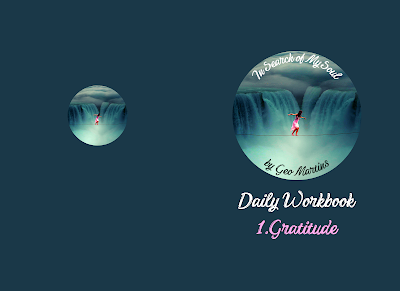
In Search of My Soul - From Human Resources Manager to Off Grid Farmer Workbooks

This is a 364-day program designed to raise your vibration by making you aware of the wonders you have in your life, about the abundance we all have been gifted with (including yourself), it will teach you about forgiveness, gratitude, taking care of yourself, being feminine and much more.


Why 364? Because I have split it in 13 parts of 28 days, partially to remember the 13 month calendar and partially to help you form new brain connections as scientists have proven that we need minimum 21 days (some of us 28) to form new habits and get rid of the old ones that no longer serve us. The only thing you have to remember - during the 28-day program, write in it every day, no breaks allowed in order for the connections between neurons to be created properly. However, you can take a break between programs.

Programs are available both separately and as a single larger book.

So far, we have the following titles available:


In Search of My Soul - From Human Resources Manager to Off Grid Farmer Workbooks

In Search of My Soul - From Human Resources Manager to Off Grid Farmer Workbooks


In Search of My Soul - From Human Resources Manager to Off Grid Farmer Workbooks


In Search of My Soul - From Human Resources Manager to Off Grid Farmer Workbooks


In Search of My Soul - From Human Resources Manager to Off Grid Farmer Workbooks


In Search of My Soul - From Human Resources Manager to Off Grid Farmer Workbooks


In Search of My Soul - From Human Resources Manager to Off Grid Farmer Workbooks


4 more to be published soon...

Enjoy,
Geo

Have Your Own Vision Ready

A dear friend sent me the video below - you will see the Facebook link at the end. I answered her privately and then I realized that it would be useful to write for everyone (preferably not to waste time watching the whole video, it shows one version of the future, only one, the one you accept , not the only one and not necessarily yours).

At this moment there is a fierce fight to implement a specific reality on Earth, a reality in which as many people as possible will be attracted - I said as many as possible, not all because they will not succeed with all of them - and this is done through visualization, through the power of thought, the greatest power you have, even if you don't believe it or don't know it. 

What you see with your mind, what you think is your future, that will become reality, the images you charge with feelings (of any kind, including fear, anger, feelings of any kind and the more intense, the better, the more the chances of that vision being fulfilled are higher). 

Do you want to live something different than what you see in the movie I linked? I mean hectares of containers where people are locked up and monitored like cattle? Then do the following:

1. Stop looking at absolutely anything that is presented to you in the news, on social networks, in movies - it is the future that is desired for you to invest energy in and live "happily";

2. Spend time imagining your future as you want it to be, preferably in a relaxed state of the brain (alpha or even better theta), as much as possible, in as much detail as possible, as well as impregnated with feelings, live every scene, enjoy every smell, taste, color - that's how you create it;

3. Get rid of low vibration feelings urgently - find the Hawkins map of consciousness online - get rid of everything that is below the level of courage. Those feelings will prevent you from living the future you want and if you think about it, those are the feelings that are triggered when you follow what I wrote in point 1 - hatred, helplessness, anger, fear of the economic crisis, of hunger , of w.a_r - none of these are real YET YET...YET. Remember this word ...YET. They are only versions of the future that you will live when you visualize them, because you trigger them and that is what is worked on so intensely, that you invest them with your energy and trigger them;

4. It's hard to accept, but what you have inside triggers the world you live outside - you're afraid of fire - there you go, have some fire please if that's what you want (remember my post here);

5. Look for solutions to get rid of low vibration feelings. I can give you the solutions that I apply, for free because I am not selling anything here. When you go up in vibration, you will start to see solutions where you don't even think. You have to feel forgiveness, gratitude, joy... and yes, when you have a high vibration, everything comes easier, including money 🙂;

6. Look for people with a higher vibration and stay next to them, learn from them, look for solutions together - you are the average of the vibration of the 5 people you spend the most time with - get rid of those who drag you down, they probably don't have any more chances to rise, get rid of them, you have no way to wake them up, run away from cowards, gossipers, revengers, enemies, from all those who refuse to evolve;

7. Run away from anything that causes low vibrational feelings - movies, news, including some church practices - no offense, the church relies heavily on fear, shame and guilt to gain control - look where these feelings are on the Hawkins scale - shame is the lowest, close to death... there are people who committed suicide because they were told at church that they had committed sins. Go where joy, peace, love are transmitted to you...choose only these feelings;

8. Think with your own mind and act with your own heart - stop letting others decide for you. There will be no more fear. Stop and think and let the positive feelings guide you. Where you feel fear, hatred, anger... it is not divine truth but something else...

The world in the video is foreign to me. Yes, I was afraid too. But now I see solutions and I don't see myself living neither in containers... nor being followed by drones.

I've been working for about 4 years to forgive all those who I thought had hurt me and I succeeded (I have solutions if you want), to get rid of resentments, fears, I'm the type that gets high in vibration with  hard work and through struggle (unlike my husband who is a calm and relaxed man), I rummage through all the corners of my being to see what is pulling me down, I got rid of the wound of abandonment that made me generate some monster scandals with my husband when it seemed to me that I didn't give due attention, I did gratitude programs, I would read in my sleep if I could, I read, learn, seek to understand, I got rid of the fear of diseases with German medicine, I made affirmations, now I do theta healing... the idea is, dear people, do something for yourselves, not necessarily what I tell you, but what you feel will lift you up.

Low feelings keep you like in a swamp, they blind you. Only by rising above them will you see more clearly. I speak from experience! This is the time of "sifting", of separating the wheat from the tares and other metaphors that keep being thrown at us. Simply put, do something to improve yourself because the waves are getting bigger and will hit you harder and harder...and you will end up in the containers in the movie 🙁

Ah...and from the 350 Hawkins level up, psychological invisibility is reached, that is, those who are much below 200 will pass by you on the street without their mind perceiving you. Is such a thing possible? I strongly believe so. Even you do not see the angels and they are there. In the end, everyone does as they feel, but do you really want a future where you are in the camp? Don't you give another reality a chance?

Kisses to you all, Geo


"Breathe Like You Eat" - The 'Ringing Cedars of Russia'

In the book series "The Ringing Cedars of Russia", Anastasia tells us a big secret : " Breathe like you eat". This means that air feeds in the same manner as food. So make sure that during this amazing period of time when trees are in bloom you spend as much time as you can outside, in a clean environment and let this wonderful, pollen-filled air feed you...


************************************************************************
You can find us here:
In Search of my Soul - from HR Manager to Off-Grid Farmer
The book: https://www.amazon.com/Search-My-Soul-Resources-Off-Grid/dp/B0BKN314H8 
The series: https://www.amazon.com/dp/B0BRTC419W?binding=paperback&ref=dbs_dp_rwt_sb_pc_tpbk 
Facebook group: https://www.facebook.com/groups/offgridfarmer 
Facebook page: https://www.facebook.com/profile.php?id=100087988694799 
Videos: https://www.youtube.com/@raise_vibration_energy/videos 
Pinterest: https://www.pinterest.com/ourlifeoffgrid/ 
Blog: https://our-life-offgrid.blogspot.com/ 


Audio:
https://geomartins.bandcamp.com/album/in-search-of-my-soul-from-corporate-human-resources-manager-to-off-grid-farmer 
https://www.kobo.com/us/en/audiobook/in-search-of-my-soul-1 https://www.chirpbooks.com/audiobooks/in-search-of-my-soul-by-geo-martins  https://www.barnesandnoble.com/w/in-search-of-my-soul-geo-martins/1142835067  https://www.scribd.com/audiobook/614175967/In-Search-of-My-Soul-From-Human-Resources-Manager-to-Off-Grid-Farmer  
https://libro.fm/audiobooks/9781669669609 
https://www.storytel.com/se/sv/books/3678331 https://play.google.com/store/audiobooks/details/Geo_Martins_In_Search_of_My_Soul?id=AQAAAEDC_G68vM 
https://www.audiobooks.com/audiobook/in-search-of-my-soul-from-human-resources-manager-to-off-grid-farmer/652597